PN (Polynucleotide) Explained: What Salmon DNA Can and Cannot Do for Your Skin
TL;DR
PN (polynucleotide) is a long-chain DNA fragment — 1,500 kDa and above — extracted from salmon gonadal tissue. Below that line sits PDRN, its shorter cousin. PN rebuilds the extracellular matrix and forms a 3D support mesh, while PDRN sends anti-inflammatory signals and supplies repair material. The strongest clinical evidence for either comes from clinic-grade delivery, and its most solid indication is wound healing. Topical products face the 500 Dalton rule: at this molecular size, very little crosses intact skin, so a cream can hydrate and comfort but cannot reproduce a clinic-grade treatment. Here is what PN can and cannot do, who should avoid it, and how aftercare changes in a tropical climate.
Start here: PN is a long-chain DNA fragment, not "salmon essence"
PN stands for polynucleotide: one strand of nucleotides joined through phosphodiester bonds, the same family as your own DNA — but extracted from salmon gonadal tissue and kept long. A 2025 review by Marques and colleagues drew the line the field now cites: below 1,500 kDa is PDRN, 1,500 kDa and above is PN — a proposal, not a regulatory definition, but a useful ruler.
PDRN is the short chain that signals and supplies material; PN is the long chain that rebuilds structure.
Short chain signals, long chain scaffolds
Calling PN the "upgraded" PDRN is a misreading: they act at different points on one repair pathway, and the difference is physical, not newness.
| Property | PDRN (short) | PN (long) |
|---|---|---|
| Molecular weight | About 50–1,500 kDa | 1,500 kDa and above |
| Viscoelasticity | Low, flows | High; forms a 3D gel |
| Main mechanism | A2A activation + salvage | Matrix remodelling + support |
| Strongest evidence | Wound healing (randomised) | Rejuvenation (split-face) |
In water, long chains tangle into a 3D network by themselves — the basis for PN acting as filler and slow-release reservoir at once.
What PN does once it is in the skin
1. Adenosine A2A: turning inflammation down
PN degrades into adenosine, which binds the A2A receptor; antagonists abolish the effect and agonists reproduce it. TNF-α and IL-1β fall, VEGF rises — less redness and swelling.
2. Salvage pathway: handing over material
Under UV or oxidative stress, cells lose much of their capacity for de novo DNA synthesis; exogenous nucleotides enter the salvage pathway and are used directly to repair the strand.
3. A 3D mesh: support, water retention, slow release
In the dermis the long chains fill micro-depressions, hold water, and slowly break into shorter fragments — structure first, signalling after.
Read the evidence in two layers: clinic-grade and topical
Marketing pages skip this: the same molecule carries very different proof depending on how it reaches the skin.
Clinic-grade: randomised trials exist, but they are small
- Diabetic foot ulcers: a double-blind randomised trial found PDRN delivered locally healed 37.3% of ulcers completely at 8 weeks versus 18.9% with placebo — the hardest evidence here, but the indication is wound repair, not anti-ageing.
- Facial rejuvenation: a 27-person split-face trial scored PN above hyaluronic acid on GAIS at 16 weeks, though other reviews found no clear aesthetic difference.
- 2026 systematic review (7 trials, 183 participants): most consistent benefit in wound healing, no serious adverse events.
Applied topically: the barrier comes first
The 500 Dalton rule: molecules above ~500 Da penetrate intact stratum corneum poorly. PN sits at 1,500 kDa and above — thousands of times over that line, so "clinic-grade effect in a serum" does not hold up physically. A 2026 study on a medium-length PDRN (≤850 kDa) did show some fragments reaching living epidermis in 31 people, but that is not clinic-grade delivery.
Reasonable: hydration, comfort, a calmer barrier. Unreasonable: filling deep wrinkles or lifting laxity.
Why the eye area became PN's first battleground
Eye-area skin is the thinnest on the face — about 0.5 mm, with few sebaceous glands — and folds 20,000 to 30,000 times a day from blinking. Lines, darkness and tear-trough hollows appear first, and fillers here easily look unnatural, so rebuilding the matrix became the alternative.
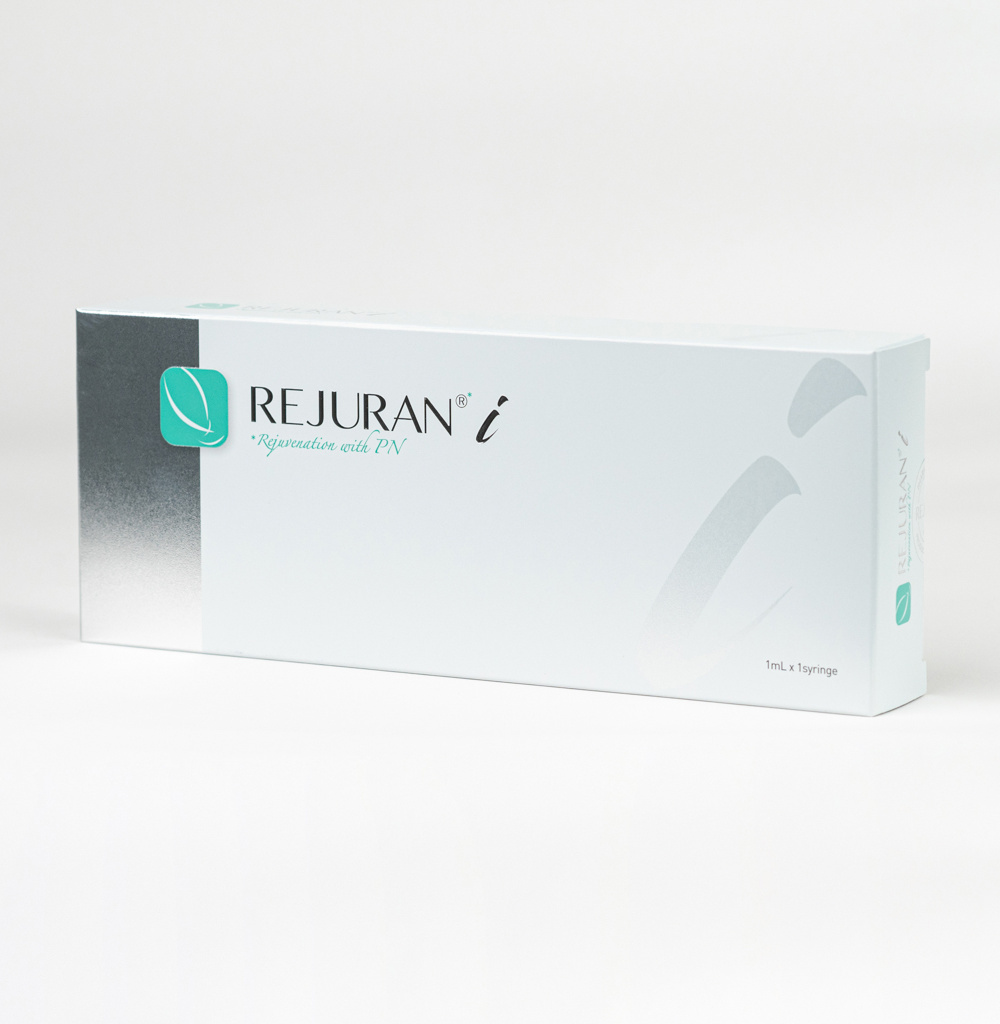
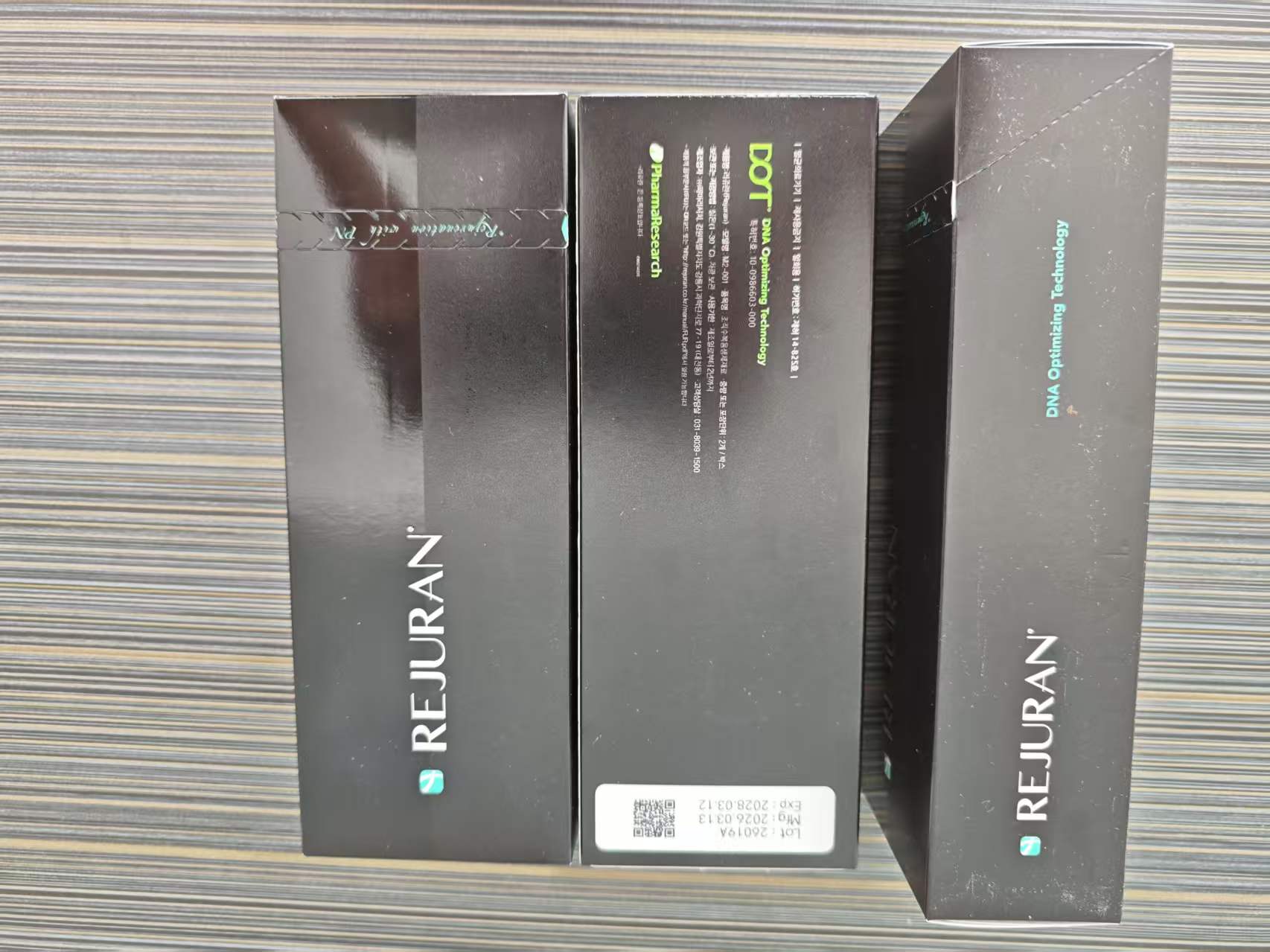
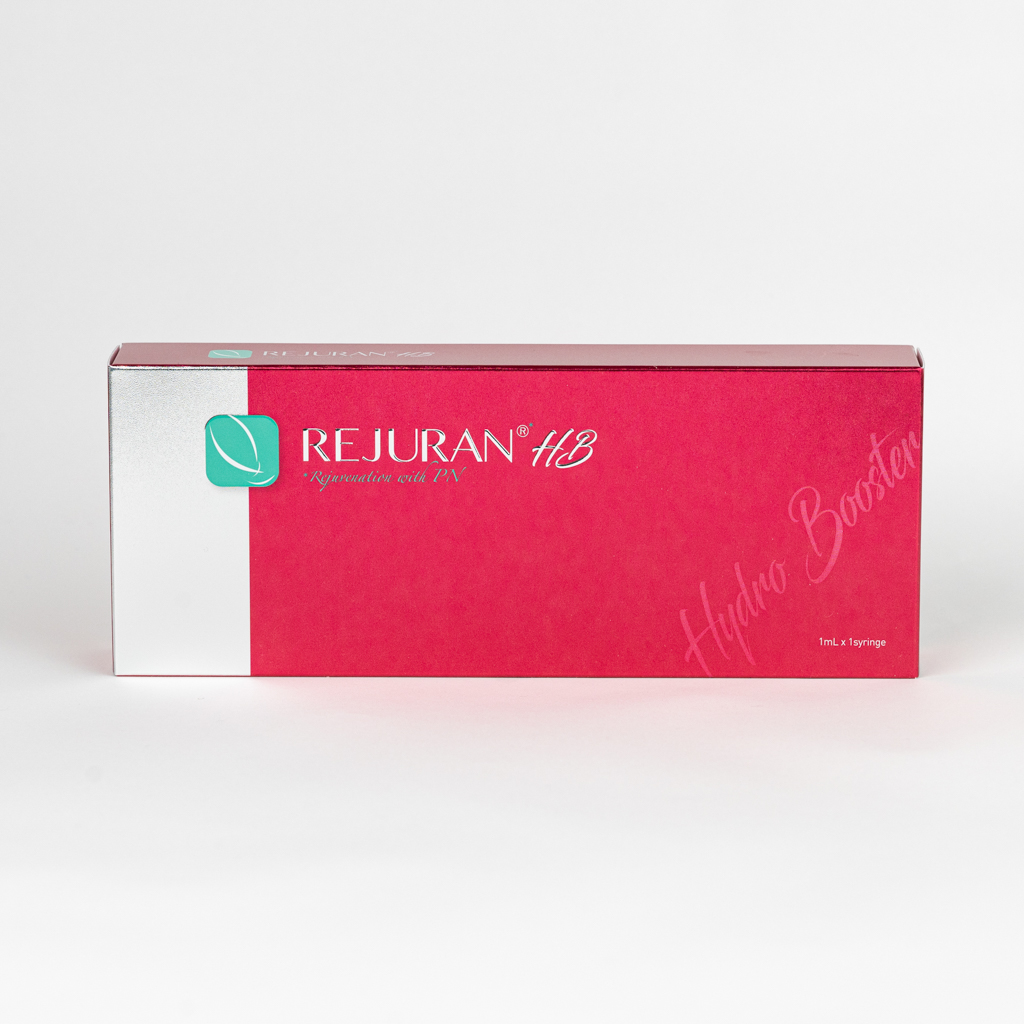
Rejuran i was built for that: an eye-area PN preparation in a 1 mL pre-filled gel. The manufacturer reports 20–30% better periorbital elasticity and at least 40% improvement in dark circles after 3–4 sessions — company data, so read it with a discount.
The timeline: not a one-off
Training, not retouching:
- 3–4 sessions per course, 2–4 weeks apart;
- change at 4–8 weeks, continuing 3–6 months;
- maintenance every 3–6 months; it rebuilds, volume does not increase.
Who it suits — and who should stop first
Usually for thin, early-lined skin around the eyes or neck where fillers would look artificial; for skin recovering from lasers or acne that needs structural repair; and for late twenties to forties whose laxity is not yet a lifting case.
Assess first, and possibly rule out: severe fish or salmon allergy (the raw material is salmon gonadal tissue), pregnancy and breastfeeding, active inflammation or infection, and immunosuppression, bleeding disorders or anticoagulants.
Risks: bruising, nodules, infection and, rarely, vascular complications. Only a qualified doctor in a licensed clinic — never self-administered.
Adjusting aftercare for Malaysia and Indonesia
What differs here is the environment, not the ingredient: heat and humidity all year, intense UV, long hours in air-conditioning.
- First 24–48 hours: no saunas, steam rooms, heavy sweating or swimming — less infection and migration risk;
- Sunscreen first: daily SPF50 / PA++++, reapplied after sweating; UV drives collagen breakdown;
- One week without stacking strong retinol, AHAs, BHAs or exfoliation — they fight the remodelling you paid for;
- Oily, acne-prone skin: PN does not control oil or congestion; cleansing and barrier care still do.
Three things to take away
1. PN is a long-chain DNA fragment (1,500 kDa+); PN and the shorter PDRN are two roles in one family, not old and new versions.
2. The strongest evidence is clinic-grade and its most solid indication is wound healing; topicals cannot dodge the 500 Dalton rule.
3. Ask for structural repair, not instant volume — it is the right tool for the first and the wrong one for the second.
Two options to look at
Both are clinic-grade PN preparations in different formats: i for the eye area, Healer for broader facial use. The procedure must be carried out by a licensed physician in a compliant clinic.
Ingredient education, not medical advice; no efficacy claim for any product. Any aesthetic procedure should be assessed and performed by a qualified physician. With a fish allergy, pregnancy or breastfeeding, consult a doctor first.
FAQ
What is the actual difference between PN and PDRN?
Same family, different chain length. PDRN sits below 1,500 kDa and works mainly through adenosine A2A receptor signalling and the nucleotide salvage pathway. PN is 1,500 kDa and above; it self-assembles into a three-dimensional gel network and drives extracellular matrix remodelling. They are two roles, not an old and a new version.
Do PN or PDRN serums and creams actually work?
Partly, and in a narrower way. Molecules this large cross intact stratum corneum poorly (the 500 Dalton rule), so the main value of a topical is hydration, surface comfort and barrier support. The 2026 human data on medium-length PDRN are still small and single-formulation, and do not equal clinic-grade delivery.
How long do results last?
A course is usually 3–4 sessions spaced 2–4 weeks apart. Change appears at 4–8 weeks and continues through 3–6 months; maintenance is typically every 3–6 months. It does not add volume, so it cannot replace a filler.
Can I use it if I have a fish allergy?
Ask a doctor first. The raw material is salmon gonadal tissue; purification leaves very little protein, but no study has looked specifically at allergic individuals.
Can I buy it and do it at home?
No. The procedure carries risks including bruising, nodules, infection and, rarely, vascular complications. It must be performed by a qualified doctor in a licensed clinic, and product from unverified sources raises the risk further.