

Hyaluronic Acid Explained: Your Skin Holds 15 Grams — Why Is That Not Enough?
TL;DR
Hyaluronic acid is a glycosaminoglycan in the extracellular matrix. Skin holds about 15 g of it, yet native HA has a half-life of only 24–48 hours. For topical HA, molecular weight decides how deep it penetrates; for filler-grade HA, BDDE cross-linking decides how long it lasts — they are not the same thing. This guide covers the structure, cross-linking and residual limits, how placement depth shapes the result, how to read the clinical evidence, and what aftercare changes in a tropical climate.
The short version: HA is a water-binding sponge, not a "hydration hero"
HA (hyaluronic acid; the salt form sodium hyaluronate is what ingredient lists show) is a glycosaminoglycan of the extracellular matrix. Two sugars alternate along a long chain — D-glucuronic acid and N-acetyl-D-glucosamine — joined by β-1,4 bonds. It is the only glycosaminoglycan in the body neither sulfated nor bound to a protein core.
Carboxyl and hydroxyl groups make it strongly negative and extremely hydrophilic. The famous "1 gram binds about 6 litres of water" is an order of magnitude, not a constant: it depends on molecular weight, concentration and cross-linking. HA absorbs water and occupies space.
Skin already holds about 15 grams, with a half-life of one to two days
A 70 kg adult carries roughly 15 g of HA, turning over about 5 g daily, half of it in skin (De Boulle et al., Dermatologic Surgery, 2013); native skin HA has a half-life of only 24–48 hours.
Hence two things: topical HA cannot "refill the dermis" — you top up surface water, not dermal molecules. And filler-grade HA must be cross-linked, or hyaluronidase and free radicals dismantle it within a day or two.
Molecular weight decides where it goes
A 2025 review of human skin studies found that 1000–1400 kDa HA stays on the stratum corneum as a film, fragments of 20–300 kDa cross it, and anything below 400 kDa can diffuse within it (Biomolecules, 2025).
Pavicic et al. 2011 (76 women, 60 days, 50–2000 kDa in 0.1% creams) saw hydration and elasticity rise in every group, but wrinkle depth fall significantly only with the 50 and 130 kDa fractions (J Drugs Dermatol, 2011). So "smaller is better" is half true: small fragments penetrate, yet trigger irritation more readily, so concentration must be controlled.
Filler-grade HA works differently — cross-linked gel is placed into the dermis or onto the periosteum, and its volume lifts the depression.
Cross-linking: from "two days" to "several months"
Cross-linking stitches HA chains into a three-dimensional network; the denser the network, the harder it is for enzymes to cut, and the longer it stays. The dominant cross-linker is BDDE (1,4-butanediol diglycidyl ether): under alkaline conditions its epoxide groups react with HA hydroxyls to form ether bonds.
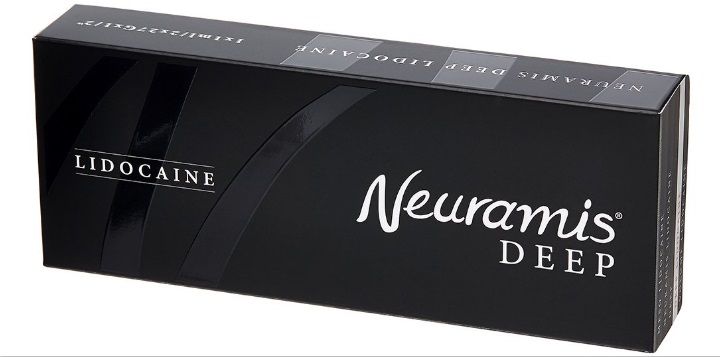
Cross-linking sets firmness too. The higher the storage modulus G', the firmer the gel and the greater its lift, suited to deep support; lower G' is softer, for superficial lines. Hence separate "deep" and "volume" formulations rather than one universal formulation.
Residual BDDE: the number regulators watch
BDDE itself is an irritant, so residual cross-linker has a hard ceiling — 2 ppm industry-wide. Purification leaves only traces, and reviews credit BDDE cross-linkers with 15+ years of clinical use (De Boulle et al., 2013).
Residual protein and endotoxin are capped too: the European Pharmacopoeia limits protein to 0.1%, endotoxin usually below 0.5 IU/mg, because both are linked to delayed swelling and granulomatous reactions.
Depth decides the result
Mid-to-deep dermal gel fills static lines such as nasolabial folds; periosteal or subcutaneous gel restores mid-face volume. Wrong depth is the commonest reason results look off: too much superficially causes the Tyndall effect, while gel too soft cannot support a deep plane.
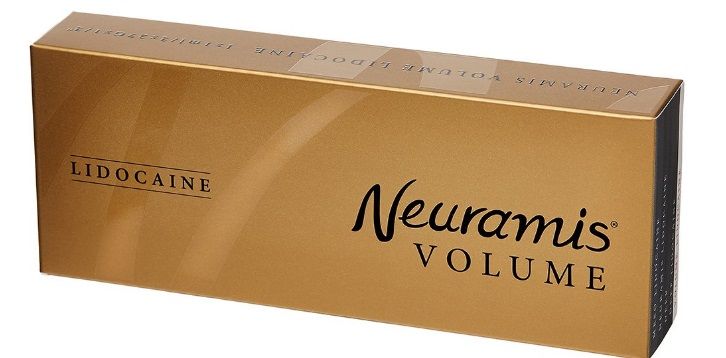
0.3% lidocaine formulations are now standard, purely to reduce pain; they do not change the filling effect. The usual format is a 1 mL prefilled gel.
Reading the evidence
For this family, an 88-patient randomised double-blind study found 96.4% still improved at 24 weeks and 80–90% responding at 104 weeks; a 58-patient phase III trial showed nasolabial improvement of 1.64 ± 0.74 on the clinician-rated WSRS at week 24, comparable to the control filler (Plastic and Reconstructive Surgery, 2016).

Those figures come from specific products, areas and raters — not "one treatment lasts two years". Labels state 9–12 months, varying with metabolism, movement of the treated area and the volume placed.
Risks: from bruising to vascular occlusion
Most reactions are mild: redness, swelling, tenderness and bruising at the treated points, resolving in 3–7 days. Early swelling partly reflects HA drawing water, not excess product.
Three categories deserve attention. Nodules and the Tyndall effect, usually from excessive superficial placement or a mismatched product. Delayed reactions and biofilm, as recurrent swelling weeks later, needing medical assessment. And vascular occlusion — gel entering a vessel can cause skin necrosis, and around the eye, blindness. That is an emergency: stop and manage per protocol.
Avoid in pregnancy and breastfeeding, over active infection, or with hypersensitivity to lidocaine or fermentation-derived components. Anticoagulants, autoimmune history and keloid scarring need assessment. HA fillers have one advantage other materials lack: hyaluronidase dissolves them, so there is an antidote.
Aftercare in Malaysia and Indonesia
Heat and humidity make early swelling more obvious, and strong UV raises post-inflammatory hyperpigmentation risk. Cold compresses for 48 hours; no sauna, hot springs, hot yoga or intense exercise for a week; no makeup that day, no water on puncture sites until they close.
Who performs it matters more. In Malaysia, dermal fillers are high-risk devices under the Medical Device Act 2012, requiring MDA registration and a qualified practitioner; Indonesia requires Kemenkes registration. Buying it does not mean you can perform the treatment.
Three things to take away
- HA is a water-binding molecule your body makes; skin holds about 15 g, with a native half-life of 24–48 hours.
- Topical HA: molecular weight decides depth. Filler-grade HA: cross-linking decides longevity.
- Hyaluronidase dissolves it, so it is relatively controllable — but vascular complications are a real emergency.
Ingredient education, not medical advice. Formulation, plane and volume are decisions for a qualified physician.
FAQ
Is topical hyaluronic acid the same as a filler-grade product?
Same molecule, different product. For topical HA, molecular weight decides how deep it can go; for filler-grade products, cross-linking decides how long it stays. They are not interchangeable.
How long does one treatment last?
Labels typically state 9–12 months. Real duration depends on metabolic rate, how much the treated area moves, and the volume placed, so individual variation is wide.
What is the most serious risk?
Vascular occlusion. Gel entering a vessel can cause skin necrosis, and treatment around the eye can even cause blindness. It is an emergency requiring an experienced physician.
Who should not have it done?
Avoid during pregnancy and breastfeeding, over active infection, or with hypersensitivity to lidocaine or fermentation-derived components. Anticoagulant use and autoimmune history need medical assessment.