PN (Polynucleotide): The Science of Salmon DNA Skin Regeneration
Artikel ini belum tersedia dalam Bahasa Indonesia. Teks asli bahasa Inggris ditampilkan di bawah.
TL;DR
A deep dive into one of skincare most promising regenerative ingredients how long-chain PN molecules activate your skin cells own repair mechanisms backed by 2026 systematic review evidence.
What Exactly Is PN? A Simple Explanation for a Complex-Sounding Molecule
PN = Polynucleotide = "Poly"-nucleotide
"Polynucleotide" sounds intimidating — but conceptually it is simple. Your DNA is essentially a chain made of individual building blocks called nucleotides. When nucleotides link together through phosphodiester bonds, they form a polynucleotide chain.
In plain terms: imagine Lego bricks linked into one long arm. Each brick (a nucleotide) is easy on its own. But when strung together into a strand, that chain becomes biologically active — and this biological activity is precisely what makes PN distinctive in skincare.
The critical threshold (Marques et al., 2025):
- PDRN: mid-to-short chain polymers — molecular weight < 1,500 kDa
- PN: long-chain polymers — molecular weight ≥ 1,500 kDa
PN and PDRN are not entirely different substances. PN is simply the longer-chained, higher-molecular-weight member of the same DNA-derivative family. Longer PN fragments lean toward remodelling the extracellular matrix (ECM), while shorter PDRN acts more through pathways such as adenosine-receptor activation.
Why Salmon? The Cross-Species DNA Compatibility Secret
You might ask: why extract PN from fish — and specifically, why salmon?
The answer is biological compatibility.
In 1952, Italian scientists uncovered a remarkable finding: salmon DNA at the base-pair level matches human DNA by approximately 98 percent. This is not coincidence — it reflects deeply shared evolutionary chemistry.
- Near-identical structure means near-zero rejection. Because salmon DNA "reads" almost identical to human DNA at the molecular level, your immune system does not flag PN as a foreign threat. Immunogenic reactions are exceptionally rare.
- Purified above 95%. Manufacturing strips out active proteins and peptides that would normally provoke an immune response. What remains is clean, high-molecular-weight DNA chains.
- Decades of proven track record. Extracting nucleic acids (first PDRN, then PN) from salmon gonadal tissue has been a mainstay of medical aesthetics for years — well-documented, repeatable, and scalable.
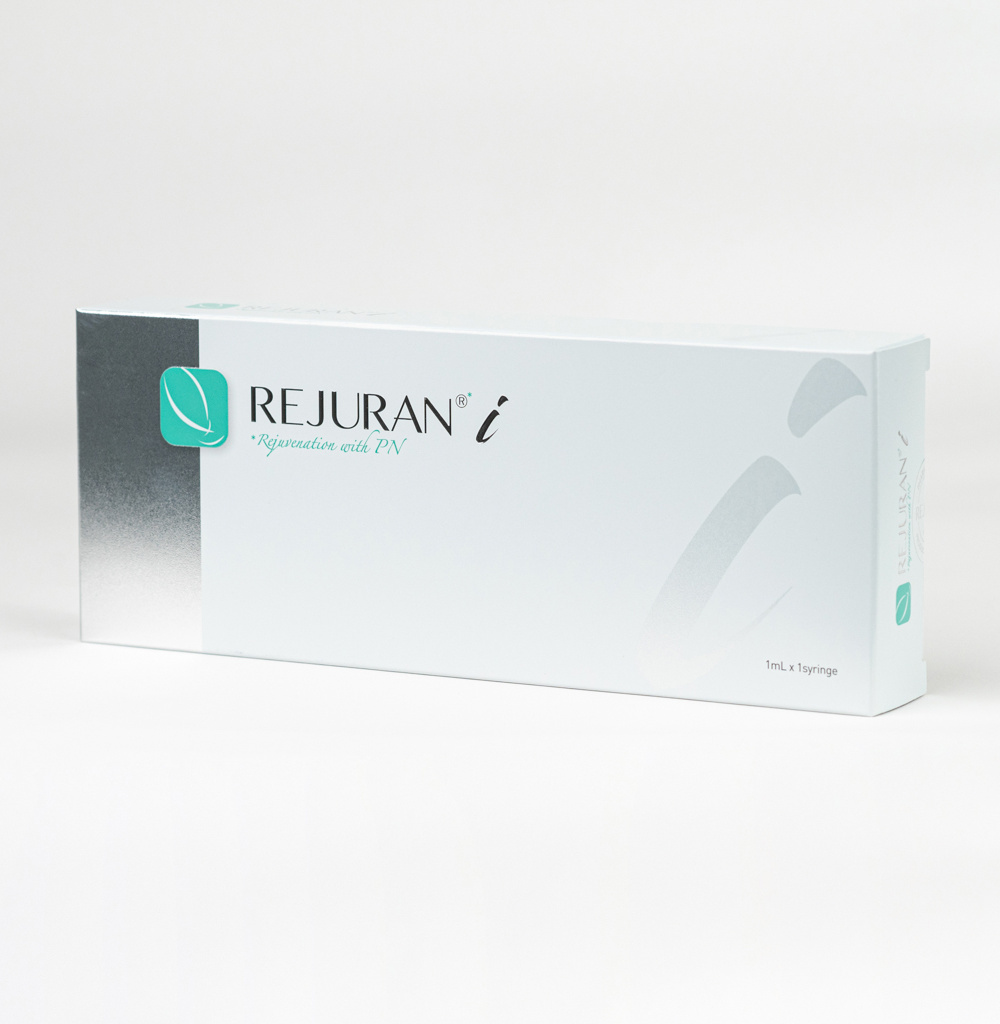
The most famous product using this ingredient: Rejuran®, which states its raw material comes from wild salmon testicular cells. That same PN power now appears in topical formulations such as Rejuran i.
Alternative sources are also being explored — plant-derived PN/PDRN from callus or cell-culture systems, and theoretically algae, plankton or crustacean sources — but salmon gonadal tissue remains the mainstream commercial source today.
How Does PN Work on Your Skin? Two Core Mechanisms
Now for the pivotal question: what does PN actually do inside your skin?
Researchers have identified two primary pathways.
Mechanism A: The A2A Adenosine Receptor "Switch"
PN's oligonucleotide and mononucleotide fragments bind specifically to a receptor on your skin cells called the adenosine A2A receptor (A2AR).
| Trigger | Downstream Skin Effect |
|---|---|
| A2AR activation | Dampens pro-inflammatory cytokines (TNF-α, IL-1β) → reduced inflammation |
| Upregulates TGF-β/Smad pathway → stimulated collagen synthesis | |
| Promotes VEGF expression → new microvasculature for better nourishment |
Clinical proof: A2A receptor antagonists completely halt PN's effects, while the A2AR agonist CGS-21680 replicates them nearly identically — confirming this pathway's central role.
Mechanism B: The Nucleotide Salvage Pathway — Direct Supply
This second pathway bypasses receptors entirely, acting as a direct raw-material delivery system.
When skin cells face extreme stress — UV irradiation, oxidative assault, or ischaemia — their ability to perform de novo DNA synthesis (building from scratch) shuts down.
PN steps in by supplying pre-assembled nucleotide building blocks through the salvage synthesis pathway. Cells incorporate these straight into the DNA they are repairing — no waiting for de novo construction.
Why this matters: this mechanism is especially powerful for reversing UV-induced damage and reactive oxygen species (ROS) injury — the two biggest drivers of premature skin ageing.
Bonus Effect: The 3D Scaffold Mesh
Beyond biochemistry, long-chain PN also has a physical function. Once in the dermis, PN molecules self-assemble into a highly viscous three-dimensional mesh — like a microscopic biological sponge.
| Mesh Function | Skin Benefit |
|---|---|
| Structural scaffold | Fills micro-depressions, provides physical support to tissue architecture |
| Water-retention matrix | Locks moisture inside the mesh — reduces transepidermal water loss (TEWL) |
| Slow PDRN reservoir | PN gradually degrades into shorter PDRN chains, delivering sustained multi-phase benefit |
PN vs. PDRN — Choosing the Right Molecule for Your Concerns
These terms are often used interchangeably by brands — and confusingly so, because they play complementary (not identical) roles.
| Feature | PDRN | PN |
|---|---|---|
| Chain length | Shorter (typically 10–30 nucleotides) | Longer (50–2,000+ base pairs) |
| Molecular weight | < 1,500 kDa | ≥ 1,500 kDa |
| Spatial structure | Random coil — no scaffolding | Helical / 3D supporting mesh |
| Core function | Anti-inflammatory + rapid repair | Deep tissue regeneration + structural support |
| Penetration depth | Shallower (smaller molecule reaches epidermis) | Deeper (retained in the dermis) |
| Duration of effect | Shorter-acting | Longer-lasting |
| Ideal for | Sensitive skin, redness, acne marks | Fine lines, laxity, loss of elasticity |
| In short | "The Signal Courier" | "The Architect / Reservoir" |
The bottom line: PDRN is the molecule of choice for rapid repair and anti-inflammation (redness, acne marks). PN is the one to reach for when you want deep structural firming and regeneration (fine lines, laxity, loss of elasticity). In practice, practitioners sometimes layer both — PDRN for surface repair, PN for deep structural support.
Rejuran® I Eyes Essence — When PN Meets the Delicate Eye Area
Rejuran® i (a.k.a. "White Box") is a skin booster designed explicitly for the eye area. Its primary active ingredient is high-purity PN, supplemented by multi-peptide cofactors to enhance its effects.
Why focus on the eye region specifically? Because:
- The skin around your eyes is one of the thinnest areas on the entire face — roughly 0.5mm thick (versus about 2mm elsewhere).
- You blink 20,000–30,000 times a day — about 7–9 million micro-folds a year, which gradually etch into permanent wrinkles.
- The periorbital area has very thin dermis with almost no sebaceous glands (less natural oil) and disproportionate UV and environmental exposure. Dark circles, pigmentation, fine lines and tear troughs appear here first.
Rejuran® i Eyes Essence confronts these challenges comprehensively:
| Concern | How PN Helps |
|---|---|
| Dark circles & pigmentation | Improves microcirculation (A2AR + VEGF pathways); downregulates melanin-related enzymes; fades post-inflammatory hyperpigmentation (PIH) |
| Fine lines & crow's feet | Stimulates collagen I and III synthesis via TGF-β/Smad; physically fills micro-depressions through the 3D mesh |
| Eye bags & puffiness | Strengthens lymphatic drainage (3D mesh); improves vascular integrity to reduce fluid leakage |
| Dryness & loss of elasticity | Deep hydration via the water-retention mesh; restores fibroblast activity for new elastin production |
| Thinning, fragile skin | Rebuilds the dermal extracellular matrix (ECM); strengthens the basement membrane zone |
Clinical data (Pharma Research Products, Korea): after 3–4 sessions (spaced 2–3 weeks apart), eye-area elasticity improved 20–30%, fine lines reduced 15–25%, and dark-circle improvement reached ≥40%.
What Does the Evidence Say? The 2026 Systematic Review
The most comprehensive clinical summary to date is a 2026 systematic review in the European Journal of Plastic Surgery (Webb et al.), examining 7 randomized controlled trials with 183 subjects in total.
| Study Focus | Subjects | Key Finding |
|---|---|---|
| Peri-orbital wrinkles (RF microneedling + PN) | 29 women, 6 months | PN arm showed significantly greater early improvement in wrinkle indentation vs. saline control |
| Wrinkles + pigmentation (microneedling + PDRN) | 24 women, 6 weeks | PDRN group achieved more wrinkle reduction; pigment outcomes comparable |
| Wound healing (PDRN vs. placebo) | Pooled | Most consistent benefit: accelerated re-epithelialisation, shortened healing time |
| Atopic dermatitis (PN intradermal) | 19 cases | Significant TEWL reduction, increased hydration, reduced facial erythema |
| Post-procedure recovery (laser / IPL) | Pooled | Faster re-epithelialisation after energy-based treatments; less post-inflammatory hyperpigmentation |
Key conclusion: PN/PDRN effects were most pronounced for wound healing; skin-rejuvenation outcomes were gentler yet consistent — exactly what you would expect from a compound that activates the skin's own repair machinery rather than imposing forceful external results.
Important caveats the authors highlighted:
- Evidence base remains modest (7 trials, 183 subjects — larger RCTs needed)
- Protocols varied substantially (concentration, injection depth, treatment frequency)
- No consensus yet on optimal dosing or maintenance intervals
Who Is PN For? And Who Should Skip It?
Good Candidates
- Ages 25–60 with dullness, dehydration, declining elasticity
- Fine lines around the eyes, nasolabial folds, early jowls
- Post-acne marks, PIH, compromised barrier function
- Sensitive skin with persistent redness or rosacea-like symptoms
- Anyone seeking preventative anti-aging — earlier is better
Not Recommended For
- Pregnant or lactating women (insufficient safety data)
- Known salmon allergy (PN originates from salmon gonadal tissue)
- Active severe inflammatory flares (e.g. cystic acne, acute eczema — treat the underlying condition first)
- Immunocompromised individuals (consult a physician)
FAQ — Common Questions About PN
Q1: Is PN only for injection? Can topical products actually work?
The most robust clinical evidence supports intradermal injection (skin-booster / mesotherapy format). However, topical PN delivery science is advancing rapidly. Products like Rejuran® i Eyes Essence represent an evolving frontier: high-purity PN formulated at concentrations optimised for transdermal penetration.
Current verdict: injected PN = strongly evidenced. Topical PN = promising, with efficacy depending on formulation quality and delivery system.
Q2: How long do results typically last?
A standard protocol involves 4 sessions, spaced 2–3 weeks apart. Initial visible improvements generally emerge at 4–8 weeks and continue developing through 3–6 months. Maintenance every 4–8 weeks helps sustain results.
Q3: PN or PDRN — which is better?
No universal winner.
- Thin, dry surface skin → PDRN (shorter chains penetrate more easily)
- Weaker dermal elasticity needing deep structural support → PN (longer chains linger longer, deposit more mesh)
Q4: Are there serious side effects?
PN is generally well tolerated. Reported reactions are typically minor and transient:
- Mild redness at the injection site (resolves within 24 hours)
- Slight swelling or bruising (temporary — usually within 48 hours)
- Small bumps at injection points (expected — integrate into tissue over 2–3 days)
No serious treatment-related adverse events were documented in the 2026 systematic review.
Summary: PN Is Skin Regeneration's Rising Star
In one sentence:
PN is a biological signal molecule — derived from salmon, recognised by your cells — that activates the skin's own intrinsic repair mechanisms.
Not magic. Credible science. A genuine trend — not empty hype.
| Benefit Area | PN Effect Level |
|---|---|
| Wound healing | Most direct & consistent (accelerated re-epithelialisation) |
| Skin rejuvenation | Gentle but persistent (fine lines, elasticity, hydration over time) |
| Inflammatory skin conditions | Promising adjunctive therapy (reduced TEWL, erythema, PIH) |
| Post-procedure recovery | Faster healing, less reaction after laser / IPL / RF treatments |
The 2026 systematic review does not claim PN cures everything. But it does establish that PN is among the relatively rare skincare ingredients whose mechanism is not merely speculative — it is documented, peer-reviewed, and increasingly supported by clinical data.
Featured Product
Seeing PN's potential for yourself? The product that inspired much of this research is formulated specifically for the delicate eye area.
This article serves an educational purpose only and does not constitute medical advice. For injectable cosmetic procedures, please consult a qualified healthcare professional.